
 Facebook
 X
X
 Pinterest
 Copy Link
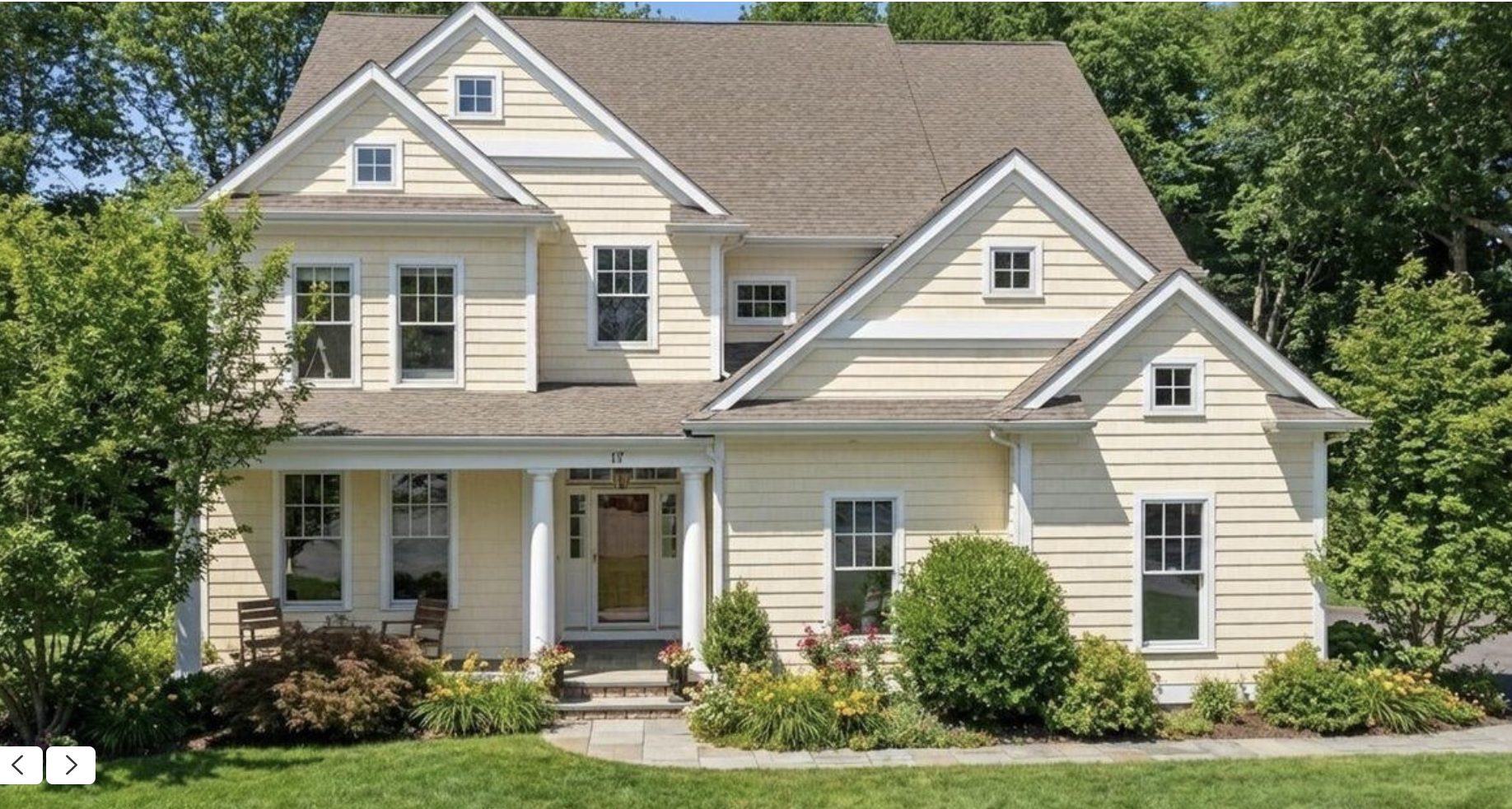
If you have ever driven the winding roads that connect Mystic to Stonington, or followed Route 1 through Old Lyme and East Haddam toward the river towns of the Connecticut Valley, you have witnessed something remarkable: a living archive of American residential architecture. The homes along coastal Connecticut are not simply old — they are storied, shaped by centuries of sea trade, Puritan settlement, and a deep cultural reverence for craftsmanship. At Shutters & Sails, we believe that understanding the traditions behind these architectural styles is the first step toward honoring them. Today we explore two of the most beloved: the enduring Colonial and the soulful Shingle Style.
The Colonial Home: America’s Founding Architectural Language
Few architectural styles carry the cultural weight of the Colonial, and nowhere is that more evident than along the Connecticut shoreline. Rooted in the building traditions that English settlers brought to the New World in the 1600s, the Colonial home was designed first and foremost for survival — thick timber frames, steep pitched roofs that shed heavy snow, and small symmetrically placed windows that kept out the bitter Atlantic wind while still drawing in precious daylight.
In Mystic, Connecticut, streets like Gravel Street and High Street are lined with center-chimney Colonials whose proportions have barely changed in two centuries. These homes speak to a time when the village was a bustling shipbuilding and whaling port — when captains and chandlers and ropemakers all needed sturdy, dignified homes within walking distance of the waterfront. The symmetrical five-bay facade of a classic Colonial — two windows on either side of a paneled center door, topped by five dormer windows above — became the gold standard of New England domestic respectability.
Move slightly west along the shoreline to Stonington Borough and the Colonial tradition deepens. As one of Connecticut’s oldest settlements, Stonington is home to some of the finest examples of early Colonial and Federal-era architecture in New England. The Borough’s narrow streets — Water Street, Omega Street, Main Street — are essentially an open-air museum, where late 18th- and early 19th-century homes stand shoulder to shoulder, their clapboard facades freshly painted in the muted blues, creams, and forest greens that are now synonymous with Connecticut coastal charm.
Travel inland toward Norwich and Lebanon, and the Colonial tradition shifts slightly — saltbox forms become more common, the homes grow larger and more spread out across their agricultural lots, and the ornamentation becomes more restrained. But the DNA is the same: symmetry, timber, proportion, and permanence.
What Makes a Colonial a Colonial?
The defining traits of the New England Colonial — whether in Mystic, Groton, or Ledyard — are its strict bilateral symmetry, its center entry door (often crowned with a simple transom or pilasters by the Federal period), its double-hung six-over-six windows, and its steep gabled roof. Interior plans typically organize rooms around a massive central chimney, which in the original vernacular homes served every room on both floors. Later Georgian Colonial variations introduced side halls and paired chimneys, but the formal, balanced exterior remained a constant. For homeowners and buyers along the Connecticut shore today, the Colonial remains one of the most sought-after styles precisely because it blends historic character with highly livable interior spaces.
The Shingle Style: Where the Shore Meets the Imagination
If the Colonial represents order and permanence, the Shingle Style represents something altogether more romantic — a late 19th-century architectural movement that treated the New England coast as a canvas for free-flowing, informal domestic design. Born in the 1870s and 1880s out of the practices of architects like H.H. Richardson and McKim, Mead & White, the Shingle Style was in many ways a reaction against the fussiness of Victorian Gothic and Italianate architecture. Its proponents wanted homes that felt as natural as the landscape they inhabited — homes that grew out of the rocky shoreline like outcroppings of lichen-covered granite.
The signature element — continuous wood shingles that clad both the roof and the walls without interruption — gives these homes their name and their most striking visual quality. Walk through the historic neighborhoods of Madison or Guilford, or along the private lanes that wind through the waterfront estates of Old Saybrook and Essex, and you will find Shingle Style homes whose cedar-shingled exteriors have weathered to a soft, silvery gray that seems to absorb the light of the Long Island Sound. Wraparound porches, asymmetrical massing, large Palladian windows, Romanesque arched entries, and sweeping rooflines that seem to tumble down toward the ground — these are the hallmarks of a style purpose-built for summer living on the New England coast.
Stonington again features prominently in this story. The late Victorian period brought significant wealth to the eastern Connecticut shoreline, and with it a wave of grand Shingle Style summer cottages — the word ‘cottage’ used in the Gilded Age sense of a sprawling seasonal home for the prosperous. Many of these survive along the Watch Hill Road corridor and the outer edges of Stonington Borough, their generous porches still catching the afternoon breeze off Fisher’s Island Sound.
In Mystic proper and in the surrounding communities of North Stonington and Pawcatuck, you can still find intact examples of more modest Shingle Style vernacular homes — smaller in scale than the grand seaside cottages but sharing the same informal, organic sensibility. These were the homes of prosperous merchants, ship captains, and mill owners who wanted something more modern and expressive than the Colonial forms of their grandparents, but who still wanted to be rooted in the materiality of the New England landscape.
The Shingle Style Today
For buyers and builders along the Connecticut shore today, the Shingle Style continues to exert an irresistible pull. New construction that draws on Shingle Style traditions — cedar shake exteriors, covered porches, generous eave overhangs, and an informal relationship between interior and exterior — remains one of the most popular approaches to coastal residential design in towns from Westbrook to Stonington. It is a style that ages beautifully, weathers gracefully, and feels — perhaps more than any other — like it genuinely belongs to this particular coast.
At Shutters & Sails, we specialize in helping homeowners along the Connecticut shoreline honor these rich architectural traditions — whether you are restoring a Colonial center chimney home in Stonington Borough, adding an historically appropriate addition to a Shingle Style cottage in Old Saybrook, or building a new home in Mystic that honors the vocabulary of the past while meeting the needs of modern living. Contact us to learn more about our work.
Photo Credit: 17 Bittersweet Way Stonington, CT 06378 Curtesy of Stan Mickus Shutters & Sails


